



| | |
| | |
|
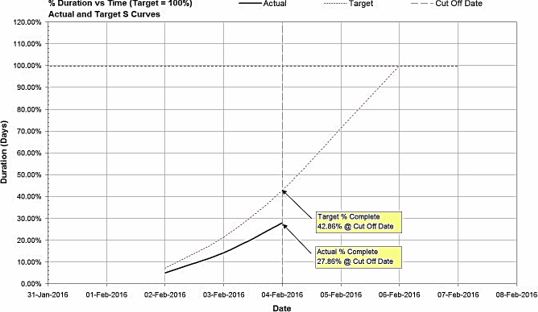
Table 12: Production ScheduleThe % Complete values represent the Task's physical percentage completion, as inspected on 4th February 2016 (The Cut Off Date). Task Duration S-curvesThe S-curves generated using Task Duration as the Quantity are shown in Figure 20. Figure 20: Percentage Task Duration S-curves (Target = 100%)Analysis of the above S-curves reveals the Project as of the 4th of February 2016:
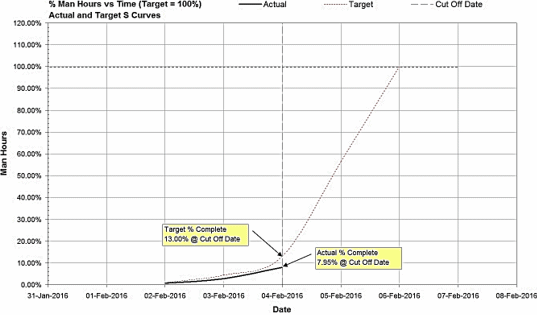
Task Man Hour S-curvesThe S-curves generated using Task Man Hours as the Quantity are shown in Figure 21. Figure 21: Percentage Task Man Hours S-curves (Target = 100%)Analysis of the above S-curves reveals the Project as of the 4th of February 2016 is:
A comparison of the above figures reveal using Task Duration as a quantity paints a very different picture of the Project's progress as compared to using Task Man Hours as a quantity. The reason for the variance in the Project's progress is that by using Task Duration as a quantity, the assumption is all Tasks require exactly the same amount of Man Hours per Day. This is often not the case in real life. In Part 4 I will justify why S-curves are so important as a reporting tool
Home | Issacons
| PM Glossary | Papers
& Books | Max's Musings | |||||||||||||||||||||||||||||||||||||||||||||||||||||||||||||||










 Generating Percentage S‑curves
